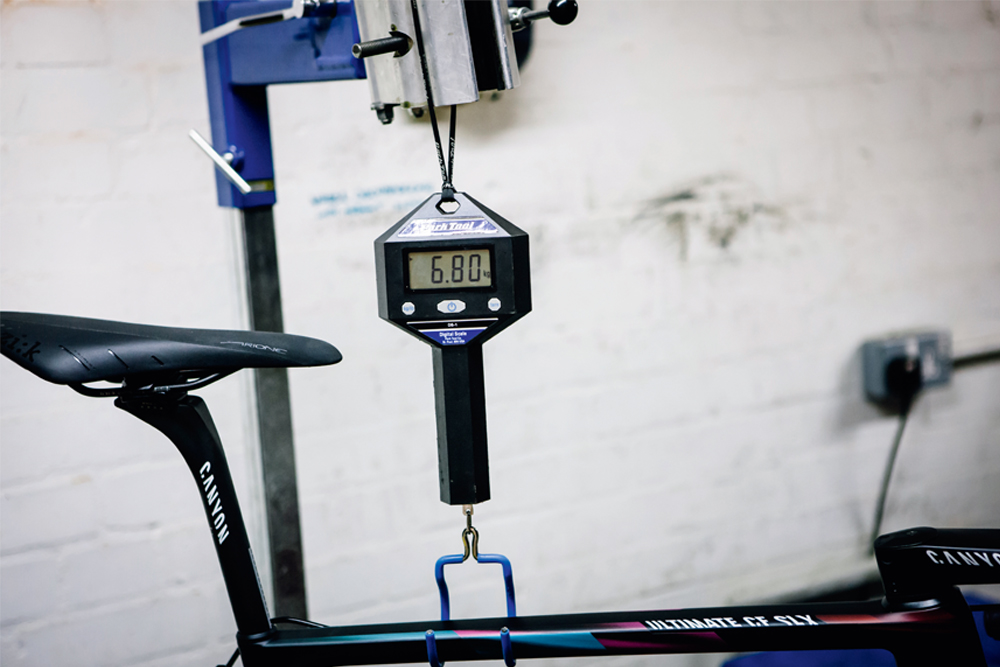
I entered our workshop the other morning straight into an in-depth discussion between a client and one of our mechanics about the merits of a brand’s new aero wheelset.
“It can save me 20 watts, and it’s 20g lighter than last year’s, for only £3,000.”
I couldn’t help but think that swapping his ancient saddle bag full of spanners for a multi-tool and getting an aero jersey would probably have the same effect for a fraction of the price.
Latest Videos FromCycling Weekly
Undercover Mechanic
Cycling Weekly’s Undercover Mechanic will be publishing his thoughts on the state of the industry once a month. He’s been working with bikes for over two decades, offering servicing on models from some of cycling’s best (and worst) marques. You’ll find him at all major trade shows and events, just don’t expect him to make himself known.
This type of attempt to buy speed is endemic among cyclists, and brands certainly play up to it. So often, clients come in asking about buying the latest carbon aero bike, while the bike that would probably suit them best sits quietly in the corner, largely ignored.
Cyclists are, generally speaking, terrible at buying bikes.
Now it’s not because they are uninformed, far from it. Cyclists are some of the most fervent researchers you’ll ever meet, often to their own detriment. They consume reviews, compare specifications, watch endless YouTube videos, and spend evenings disappearing down internet rabbit holes. Anyone who has had the courage to venture into a time trial forum online will understand just how zealous cyclists can be in the search for the next best thing. As someone much more erudite than me once said, ‘the problem is a feast of information but a famine of knowledge’.
The bicycle industry hasn’t helped, of course. Like most leisure industries, marketing bikes has become an exercise in selling numbers. Weight, tyre clearance, gear range, aerodynamics, carbon layup, stiffness. Every new product is accompanied by a list of measurable improvements because measurable things are easy to market but largely meaningless in terms of the potential enjoyment of that bike or product. How many riders really understand what difference having a higher-strand Toray carbon layup provides?
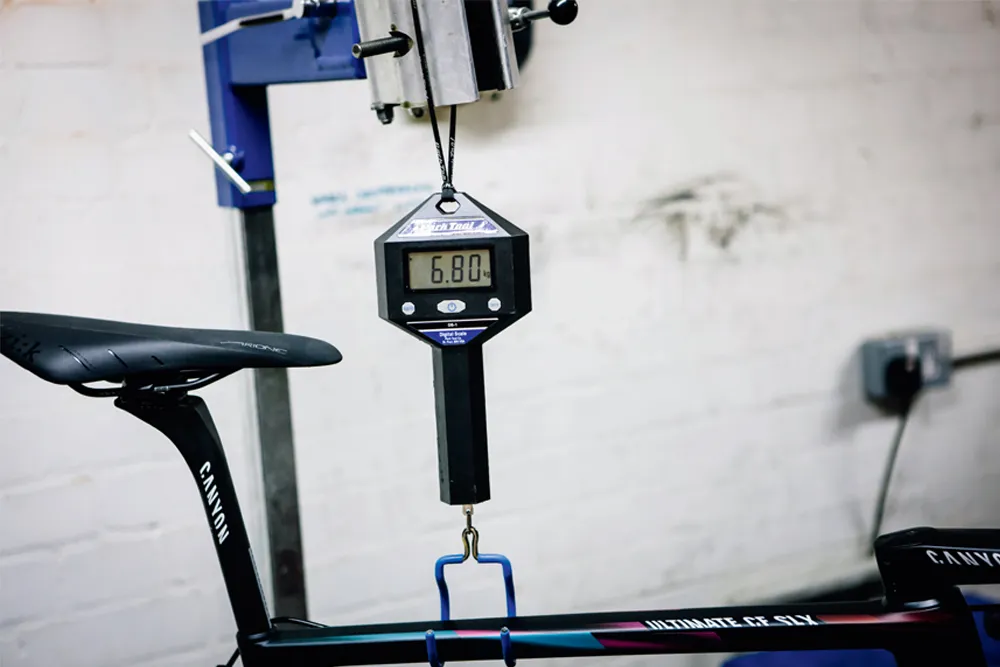
Unfortunately, the things that make a bike enjoyable to ride aren’t always the things that fit neatly into a comparison table.
Ride quality doesn’t have a specification. Confidence doesn’t appear on a geometry chart. The feeling you get after four comfortable hours in the saddle is difficult to reduce to a bullet point. Instead, we compare the things we can measure.
Weight is perhaps the best example. Riders will happily spend hundreds of pounds to save a couple of hundred grams, then head out carrying two full water bottles, a mini pump, multitool, snacks and enough emergency equipment to survive a trip round the world. That’s not to say weight doesn’t matter; weight has an influence, but its importance is often wildly exaggerated outside the world of elite racing.
I’ve seen countless riders buy aggressive race bikes when what they really wanted was to spend longer riding in comfort. Six months later the sleek aero bike has acquired a slightly higher stem, 50mm of headset spacers and tyres as wide as the frame will allow. They’re quietly modifying it into the endurance bike they probably should have bought in the first place.

(Image credit: Aaron Borrill)
Geometry rarely gets the attention it deserves because it isn’t glamorous. It’s easier to get excited about carbon lay-ups or ceramic bearings than stack, reach and wheelbase measurements. Yet geometry has far more influence over how a bike feels than whether the rear derailleur is electronic or mechanical. It’s a bit like buying a house based entirely on the kitchen taps whilst ignoring the floor plan.
The irony is that the best buying decisions are often the least exciting. None of us need a bike that costs more than around £1,000 – after that point it becomes an emotional purchase. A bike that fits properly, tyres suited to the roads you actually ride and sensible gearing. None of these features dominate glossy advertising campaigns, but they have an enormous influence on how much you’ll enjoy cycling. It’s refreshing to see some brands start to create frames with sensible geometry but with a race bike aesthetic, like the Pinerello X, Pearson Forge and the Factor Monza.
Perhaps the biggest lesson I’ve learned after years around bikes is this: the specification sells the bike, but the ride keeps it. Long after you’ve forgotten exactly how many grams your crankset weighs or whether your handlebars are one piece or two, you’ll remember if the bike encouraged you to take the long way home.
That’s the specification that really matters.
