6
Chlorine vs. Currents: 3 Key Differences between Pool and Open Water Swimming
For many swimmers, transitioning from a lap pool to open water can feel overwhelming, like entering an entirely different sport. Even though both pool and open water swimming rely on the same fundamental stroke mechanics, the environment changes everything.
Whether you are preparing for your first open water race, a triathlon, or simply looking to swim beyond the lane lines, here are the three key differences between pool swimming and open water swimming.
1. Navigation: Following the Black Line vs. Sighting
- In the Pool: You have a painted black line on the bottom of the pool, lane lines to your sides, and clear walls at every 25 or 50 yards or meters. Navigating is virtually automatic. Your focus is on maintaining form and pacing.
- In Open Water: There are no painted black lines, walls, or lane lines. To swim in a straight line, you must master the art of “sighting”. Sighting involves lifting your eyes above the waterline every few strokes to navigate toward buoys and landmarks. Without sighting, open water swimmers may swim too wide or too far, feel lost, and add unnecessary distance and fatigue.
2. Stroke Technique: Precision vs. Adaptation
- In the Pool: Calm and predictable water allows for a long, fluid stroke. You can rely on walls and underwaters at every length of the pool to rest and reset your rhythm.
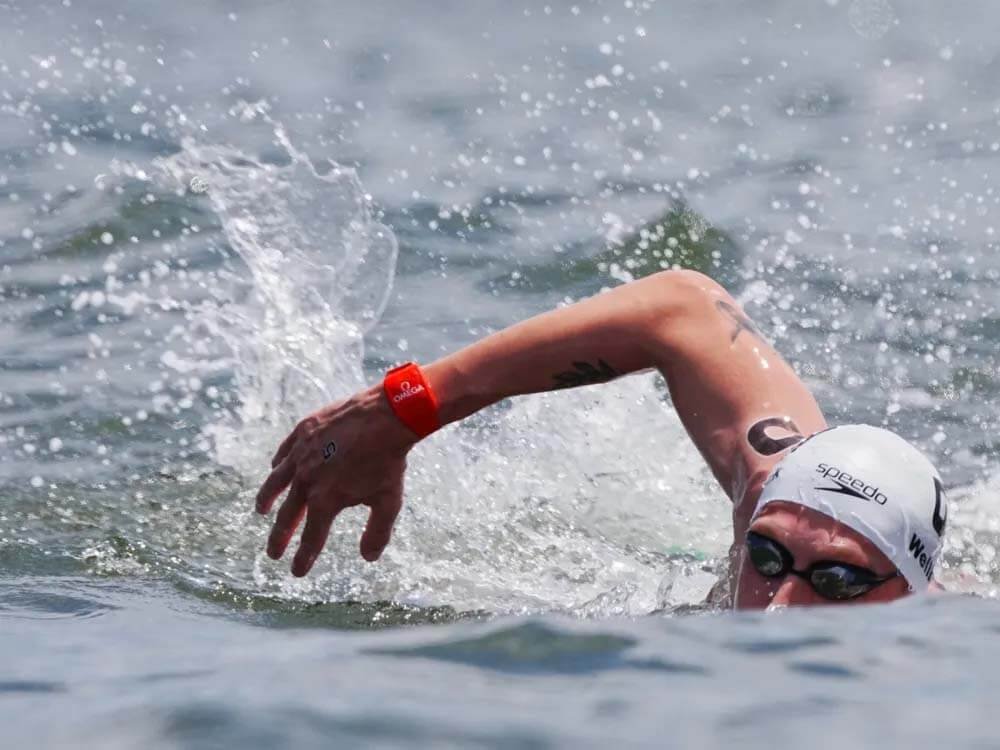
- In Open Water: Waves, choppy water, wind, and currents demand adaptability. To swim through unpredictable surface chop, open water swimmers typically adopt a higher stroke cadence with a slightly higher arm recovery. This helps to avoid catching waves. In addition, there are no walls to push off or underwaters in open water swimming. Open water requires continuous effort from start to finish.
3. Environment: Climate Control vs. Unpredictable Elements
- In the Pool: Water temperature is regulated, visibility is clear, and safety is immediate. Conditions are predictable; therefore, sensory stress is minimal. This environment makes it easy to fall into a relaxed stroke rhythm.
- In Open Water: Open water swimmers face the challenges of changing temperatures, dark or cloudy water, currents, wind, and occasionally marine life or crowds of competing swimmers. Cold water shock and lack of visibility can trigger anxiety or panic in beginners. Open water swimmers develop mental resilience and focus on proper breathing patterns. Using appropriate gear, like a wetsuit, is often recommended or required for safety when swimming in open water.
Overall, success in open water requires a shift in perspective. Swimmers must be willing to trade in the security of a controlled environment for adaptability and environmental awareness.
