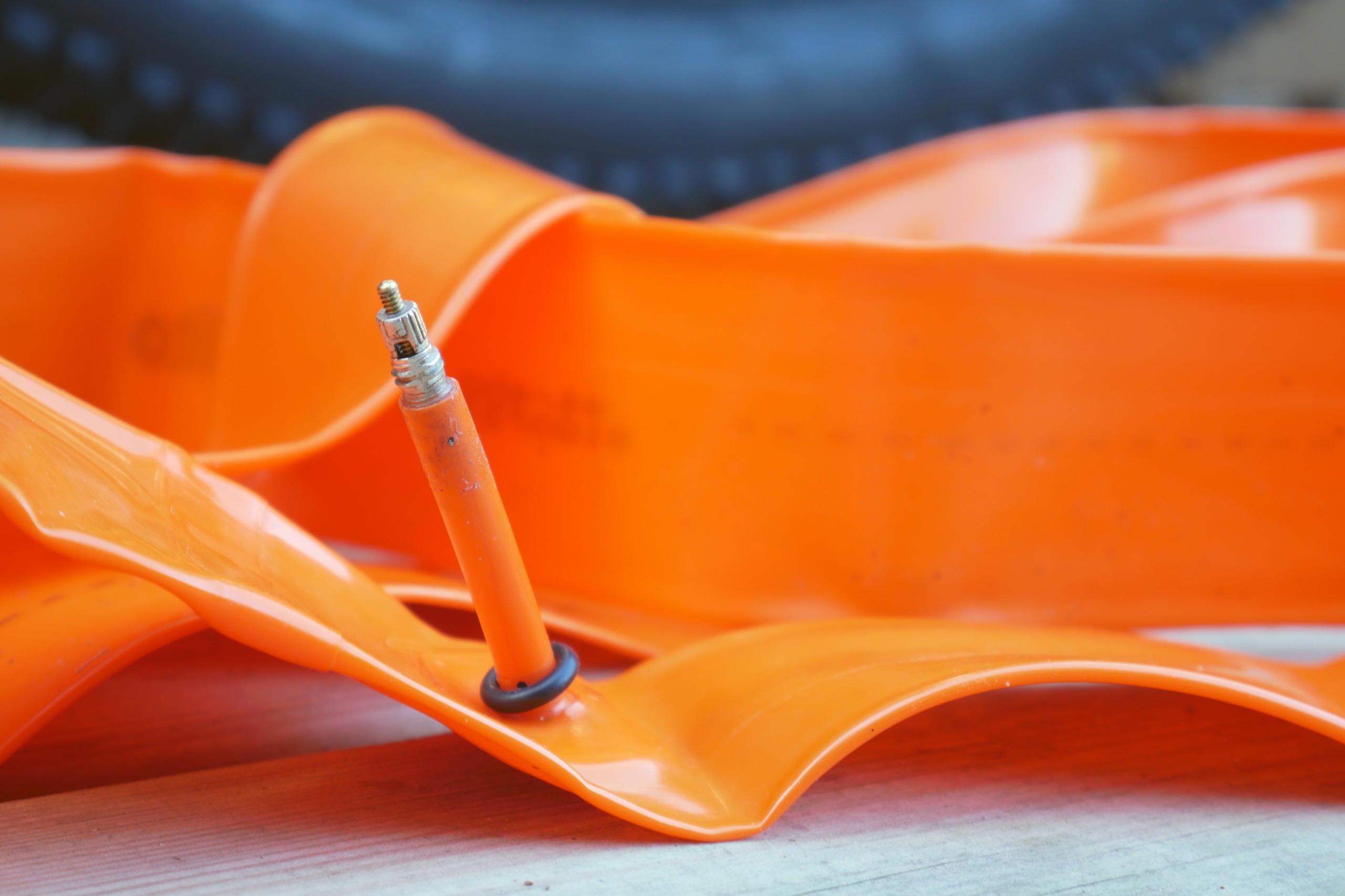
TPU tubes have become ‘the’ go-to alternative to tubeless setups, offering a clean and faff-free installation, while still being lighter and more durable than traditional butyl rubber inner tubes.
However, in our testing of the best TPU inner tubes, expert Tyler Boucher cracked several valves when using too much force with a manual pump. This doesn’t seem to be the only issue; at Cycling Weekly, we’ve heard several reports of complete failures after ‘melting’ valve stems when using electric bike pumps.
I’m a strong advocate and user of both products – TPU tubes are an incredibly durable, lightweight emergency option for me, and electric pumps are just brilliant. My one tiny electric pump replaced my two mini pumps (one for road, one for MTB/Gravel), my airshot tubeless booster, and most of the heavy lifting done by the floor pump. So, I wanted to investigate what’s going on.
Latest Videos FromCycling Weekly
To do so, I sat down with Christian Thill from German brand Aeron (part of the RTI group, owners of Ergon) and renowned tyre expert and Rene Herse owner Jan Heine to discuss the failures, how to prevent them, and what is next for TPU inner tubes.
The science behind the issue of ‘melting’
First, we need to understand why electric pumps generate so much heat. The issue stems from their high-RPM micro-compressors, which rapidly force air into a small space, creating friction from both air compression and the motor. Their tiny cases also mean they don’t have enough surface area to dissipate this heat. That’s where thermodynamics takes over, and heat immediately takes the path of least resistance – down the valve stem.
According to Heine, this isn’t about material properties in isolation; it’s about how materials dissipate heat when combined. “The ‘T’ in TPU stands for ‘Thermal’. What many don’t understand is that butyl tubes are also thermally extruded, and they’ve proven themselves for decades without melting, despite their lower melting point”; a butyl tube’s melting point is around 150 degrees compared to TPU’s 180 degrees.
(Image credit: Matt Ischt-Barnard)
The difference with TPU tubes is the valve and its bond to the tube. ”Differential thermal expansion can cause the glue bond to break between the metal valve core and the TPU material. Obviously, heat from e-pumps makes this more likely,” he explained.
Thill agreed: “While this is the current accepted manufacturing method and TPU can withstand a reasonable amount of excess heat, this bond is a complicated manufacturing process and not foolproof”.
So, the TPU film isn’t melting; it’s the tiny joint between plastic and metal that is deforming under thermal stress, something not found on butyl tubes, as rubber and metal are easily bonded through vulcanisation.

(Image credit: Matt Ischt-Barnard)
Is there a way to prevent damaging your TPU valve?
Several TPU manufacturers, including Aeron and Rene Herse, recommend using a flexible hose extender. Electric pumps usually ship with rubberised hoses that screw on and help dissipate heat; alternatively, you can use an old-school aluminium valve extender, which you might use with a deep-section rim.
If you don’t have an extender on hand, Heine suggested: “inflating in 20 psi bursts and then waiting a minute before continuing.”

(Image credit: Matt Ischt-Barnard)
What’s stopping manufacturers from using metal valves?
Both Heine and Thill offered similar responses when asked why brands weren’t using metal valves.
“You can’t simply glue TPU to metal, so everybody needed to find a different solution”, said Heine, adding, “and plastic probably seemed like a more lightweight option”. Thill cited possible “cost-savings and ease of bonding TPU with TPU at the tube end of the valve stem” as reasons for choosing plastic over metal.
Given the original brief for TPU inner tubes was likely that they needed to be lighter than rubber, you can see how they reached these conclusions, especially if the manufacturing process didn’t support anything else.
“Product development for Aeron happens at our campus in Koblenz using an in-house test lab, while manufacturing takes place at a specialised TPU manufacturer in Austria,” explained Thill. While he couldn’t share specifics, he said the factory’s expertise lies in manufacturing TPU for phone speakers, meaning the brand has had to look far beyond the traditional bicycle supply chain.
Looking to the future – what’s next for plastic inner tubes?
Rene Herse hasn’t offered a plastic option; instead, it became the first with a metal stem. “Basically, the TPU material is trapped between the valve and a ring. Our supplier patented the technology – we worked with them to perfect it,” said Heine.
Aeron has also moved toward wider adoption of metal valves, keeping plastic stems for its ‘ultra-light’ tubes and metal for everything else. Thill noted that “our factory had to open a number of new patents to make this connection between TPU and metal possible”.

(Image credit: Rene Herse)
While both brands have taken similar paths with what we will call ‘second generation’, they differ slightly on what’s next. Heine believes much of what happens with TPU tubes hinges on tubeless development. “Maybe a new and better material will come along… or maybe tubeless will improve to the point where it will be universally adopted. From a technical standpoint, it’s hard for me to see how we can get there”.
Heine did mention that he could see advantages in wider gravel use, after his own testing, “the advantages of tubeless aren’t worth the hassle unless you’re a top-level gravel racer. Beyond that, I wonder when gravel racers will look to TPU for the (very real) speed benefits over tubeless.”
As for Aeron, Thill leans more toward material development and believes the next step could come from tyre manufacturers creating an ecosystem with TPU tubes, similar to tubeless setups. “Future developments could involve collaborations between tyre and inner tube brands to create optimised setups that rival tubeless performance”. This is similar to the recent launch of the Continental tube-only Grand Prix tyres, which are claimed to match the tubeless performance version.

(Image credit: Aeron)
The bottom line
While these first-generation TPU plastic valve stems can be damaged by use with an electric bike pump, there are some very easy workarounds when facing roadside stoppages – be that with a flexible extension hose or Heine’s gradual burst approach. However, as Jan Heine and Christian Thill highlighted, second-generation metal valves effectively eliminate the heat issue altogether, thanks to advances in manufacturing processes from both brands.
What was more compelling was our conversations about what could be on the horizon for TPU in the future – if tyre and tube ecosystems are improved, could these replace the faff of tubeless? Time will tell.
