College Swimming League to Bring Stakes to Early Season Competition
Most years, the NCAA swimming season begins in late September and early October with a series of relatively low-profile dual meets. Maybe you would see a few standout performances here or there but nothing more, no actual consequences for winning or losing, and most of the sport’s major rivalry meets would not happen until January. Training took priority over racing for most teams, an understandable coaching decision considering the long season to come.
The new College Swimming League should inject some energy into this portion of the sport’s calendar, beginning with a pair of competitions in Westmont, Ill., later this week. Indiana, Louisville, Michigan and Ohio State will compete Thursday before Alabama, Georgia, NC State and Virginia race Friday, with both meets beginning at 5:30 p.m. CT. The standings at each meet will help determine the CSL’s season standings, with first place earning four points, second place three, third place two and fourth place one.
Each of the CSL teams, a list that also includes Auburn, Cal, Stanford and Tennessee, will try to advance to the CSL postseason. The top-three teams automatically advance to the CSL Championship. Teams four through seven make it to the Wild Card match, whose winner will get the last spot in the CSL final. Both of those meets will take place the first week of November in Indianapolis.
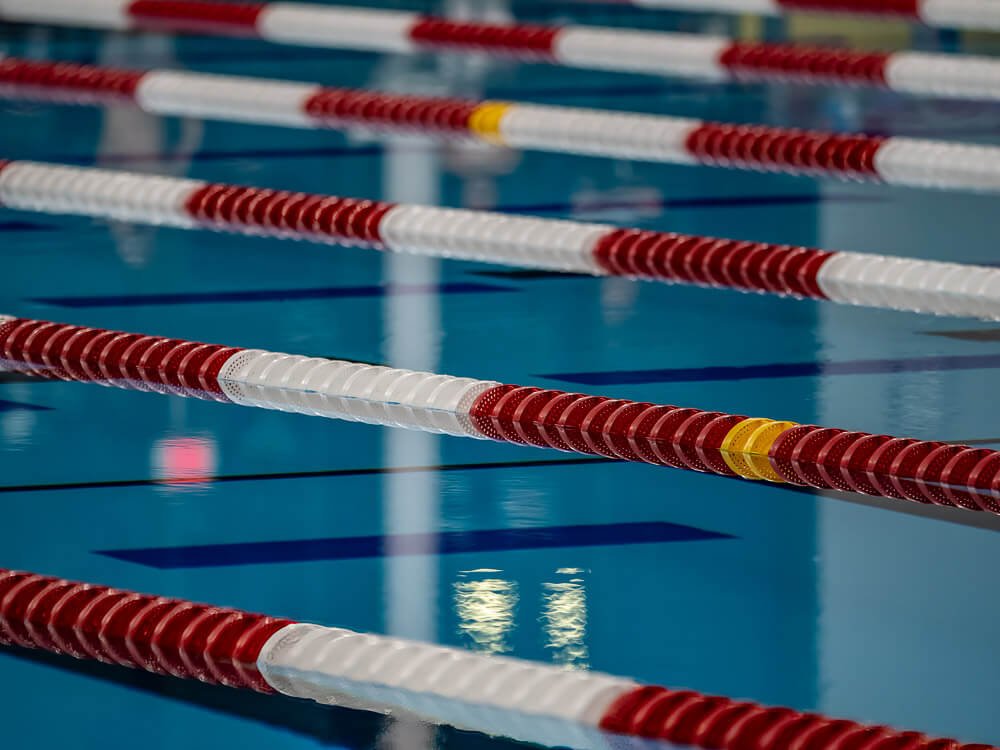
The CSL matches will be run according a similar structure to the International Swimming League, where each team is assigned two adjacent lanes. The first meet will see Michigan in lanes one and two, Indiana in three and four, Ohio State in five and six and Louisville in seven and eight. Teams must also wear consistent cap colors assigned by the league to ensure contrast; for the first two matches, all teams will be in either black or white caps while Virginia maintains its traditional navy blue.
Each meet will include 100 and 200-yard events of each stroke as well as the 50 and 500 freestyle, 100 and 200 IM and a 200 freestyle relay. Skins competition returns from the ISL while Super Skins will conclude each meet with an elimination relay. Here’s how the official CSL rulebook describes the events:
- Skins events are elimination-style individual races contested over 50 yards per round; the same stroke is used in every round, with the top finishers advancing to the next round.
- Super Skins are elimination-style relay events in which all rounds are contested as a full 200 Medley Relay (4×50); teams are eliminated each round.
Both events include four rounds, with the lowest two finishers knocked out each round. Swimmers have two minutes rest between each round of individual Skins, and the rest goes up to three minutes between each relay round. For the individual event, the team winning the corresponding gender’s 200 free relay will be able to pick which stroke will be contested.
A team may enter an athlete in three individual events plus the 200 free relay and Super Skins. Every swimmer scores points, with nine point for first place, seven for second and down to one for eight. Relays double the points. The Skins and Super Skins will have a huge impact on team scoring since points will be given based on finishes in each round, not just overall finish. Finally, jackpots will return, allowing the winning swimmer or relay team to “steal” points from those who finish below a certain threshold.
The league intends for all of this to take place within a 2.5-hour window, allowing for maximum fan engagement. With 30 races on the slate, they should come quickly, with little break in between. The league has hired DJ Roueche, known for his work with the Los Angeles Lakers of the NBA, to enhance the atmosphere at each match.
Team scoring will be at the forefront at each match, with women’s and men’s competition scored together. That will bring a nice change-of-pace from the norm of single-gender college swimming competition. Of course, swimmers can still achieve NCAA qualification standards throughout each CSL match, although many will surely struggle to maintain top form as they get fatigued over the course of numerous races in one session.
This new, innovative format has serious potential, especially in an otherwise-quiet time for the sport. It does not replace the primary focus competitions for each team, the conference and NCAA championship meets in the spring, but they can now chase a different sort of championship as they ramp up their training this fall.
Full CSL match event order:
- Women’s 200 Backstroke
- Men’s 200 Backstroke
- Women’s 200 Breaststroke
- Men’s 200 Breaststroke
- Women’s 500 Freestyle
- Men’s 500 Freestyle
- Women’s 200 Freestyle Relay
- Men’s 4×50 Freestyle Relay
- Women’s 200 Butterfly
- Men’s 200 Butterfly
- Women’s 100 IM
- Men’s 100 IM
- Women’s 100 Backstroke
- Men’s 100 Backstroke
- Women’s 100 Freestyle
- Men’s 100 Freestyle
- Women’s Skins
- Men’s Skins
- Women’s 200 IM
- Men’s 200 IM
- Women’s 100 Breaststroke
- Men’s 100 Breaststroke
- Women’s 50 Freestyle
- Men’s 50 Freestyle
- Women’s 100 Butterfly
- Men’s 100 Butterfly
- Women’s 200 Freestyle
- Men’s 200 Freestyle
- Women’s Super Skins
- Men’s Super Skins
