More Than the Clock: Why Team Culture Matters in College Swimming
A swimmer can survive a hard practice. What is harder to survive is feeling alone in a lane full of people.
Swimming is often treated as an individual sport. When we step onto the block, no teammate can swim the race for us. The scoreboard shows one name beside one time, and improvement is measured down to the hundredth of a second.
But college swimming has taught me that no performance is completely individual.
Behind every race are the people who stood beside us through early mornings, painful sets, disappointing meets and the days when getting into the pool felt harder than anything written on the whiteboard. Talent matters. Training matters. But the culture surrounding an athlete can determine whether that talent grows or slowly disappears.
I have experienced seasons when I felt strong and successful, and others when my times did not reflect the work I was putting in. During those difficult stretches, what affected me most was not always the number on the clock. It was whether I felt that I still mattered when I was not performing at my best.
That is the question at the heart of team culture: Do athletes feel valued only when they are fast, or do they know they belong even when they are struggling?
In college, swimmers spend an enormous part of their lives together. We practice, lift, travel, eat and compete beside one another while also managing classes, injuries, illness and personal challenges that teammates may never fully see. A team can become an athlete’s second family, but wearing matching caps does not automatically create closeness. Belonging is built in smaller moments.
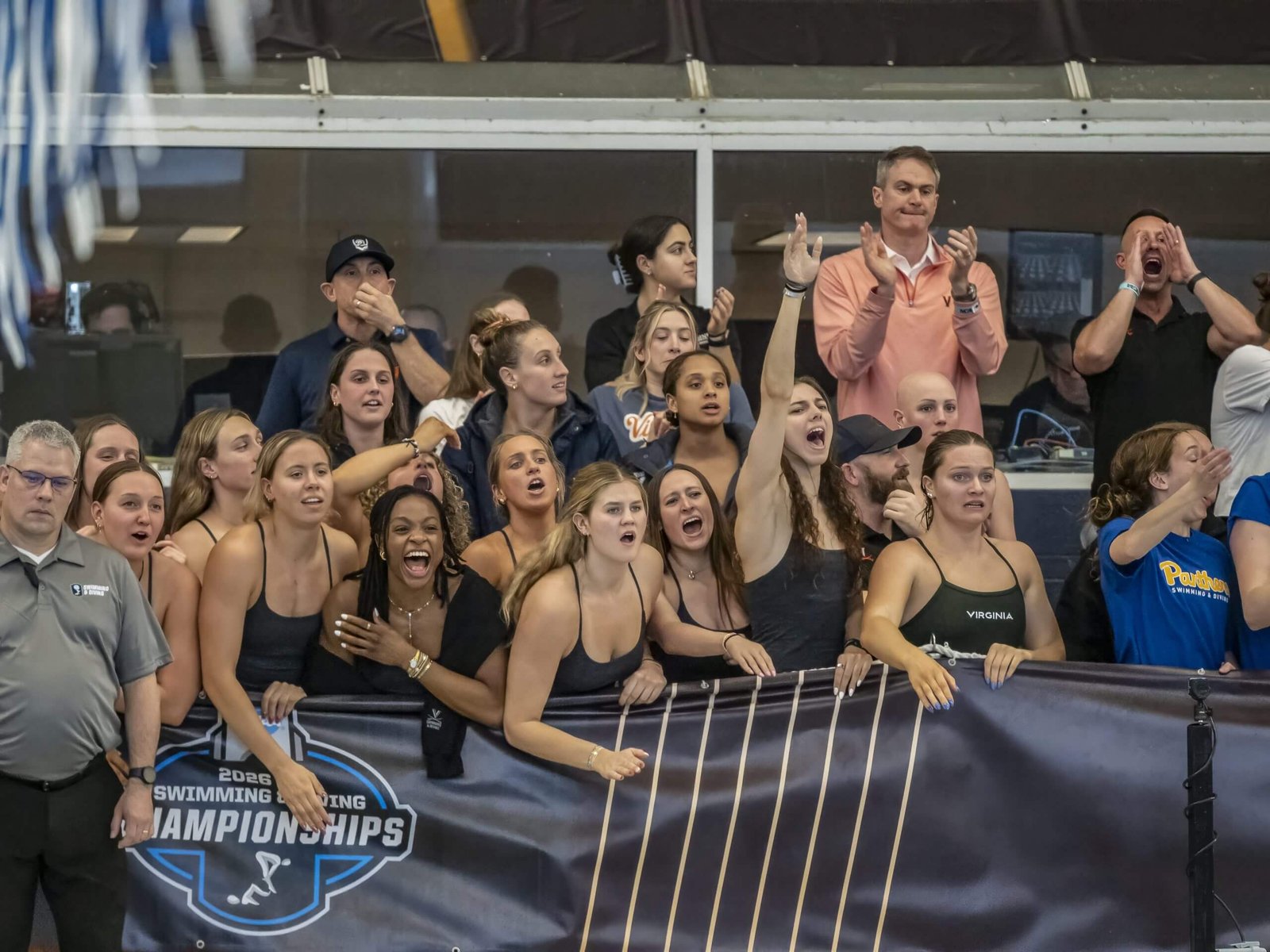
It is built when the entire team cheers for the last swimmer finishing a set. It is built when someone notices a teammate having a quiet day and checks on them. It is built when an injured athlete is still treated as part of the team, not as a problem standing on the side of the pool.
It can also be broken in small moments. Cliques, gossip and constant comparison may seem harmless at first, but they can make athletes feel invisible. Swimming already gives us endless opportunities to compare ourselves. There is always someone with a faster time, a better practice or a spot on a relay we wanted. If teammates begin viewing one another only as competition, the sport becomes incredibly lonely.
Now, as a captain, I think more deeply about the kind of environment leaders help create. Leadership is not just giving speeches before a meet or being the loudest person behind the lane. Sometimes it means sitting beside the teammate who had a terrible race. Sometimes it means including the person who is quieter or does not naturally fit into the largest group. Sometimes it means addressing behavior that is hurting the team, even when staying silent would be easier.
Being a captain does not mean having every answer. It means paying attention.
A positive culture is not one in which everyone is happy all the time. That would be fake, and swimmers can smell fake positivity from the opposite end of the pool. Strong teams still experience conflict, jealousy and disappointment. The difference is that they do not allow those emotions to erase respect.
Culture affects performance because people are willing to risk more when they feel safe enough to fail. An athlete who knows one bad race will not change how the team sees them can compete with courage instead of fear. Encouragement cannot replace preparation, but it can help athletes trust the preparation they have already done.
At the end of a season, times and championship results matter. We train too hard to pretend otherwise. But years later, most athletes will not remember every split. They will remember who celebrated with them, who stayed after a painful race, and whether they felt loved only when they were useful.
The clock records how fast we swam. Team culture determines who we became while trying to swim faster.
