Swimmers’ Villain Origin Stories: The Moments That Created a Personal Vendetta
In swimming, there are few things more devastating than realizing you have another 50 yards to swim after you have already taken off your goggles. Or missing a championship cut by .02. Or getting disqualified after dropping eight seconds. Or even, apparently, forgetting that goggles are a fairly important part of swimming.
Every team has stories like these. The races that went spectacularly wrong, the mistakes that seemed impossible to make until someone made them, and the moments that were absolutely miserable at the time but somehow became hilarious later.
They may not be the moments swimmers put on their highlight reels, but they are the ones teammates remember. And sometimes, they become the stories that make us come back to the pool determined to do better.
These are swimming’s villain origin stories, born from the races we wish we could redo, the mistakes we’ll never live down, and the moments that turned an ordinary meet into a personal vendetta.
The Early Finisher
At 11 years old, I was still relatively new to my swim team, but I already knew one thing about myself: I wanted to swim the hard events. I was drawn to races other swimmers my age weren’t necessarily eager to sign up for, so when the opportunity to swim the 500 freestyle came along, I didn’t hesitate.
I remember the race clearly: the pool, the team, and the excitement I felt stepping up to swim an event that long. There was little pressure, no time I was trying to beat, and not much competition. When I dove in, I felt fast. Everything seemed to be going well.
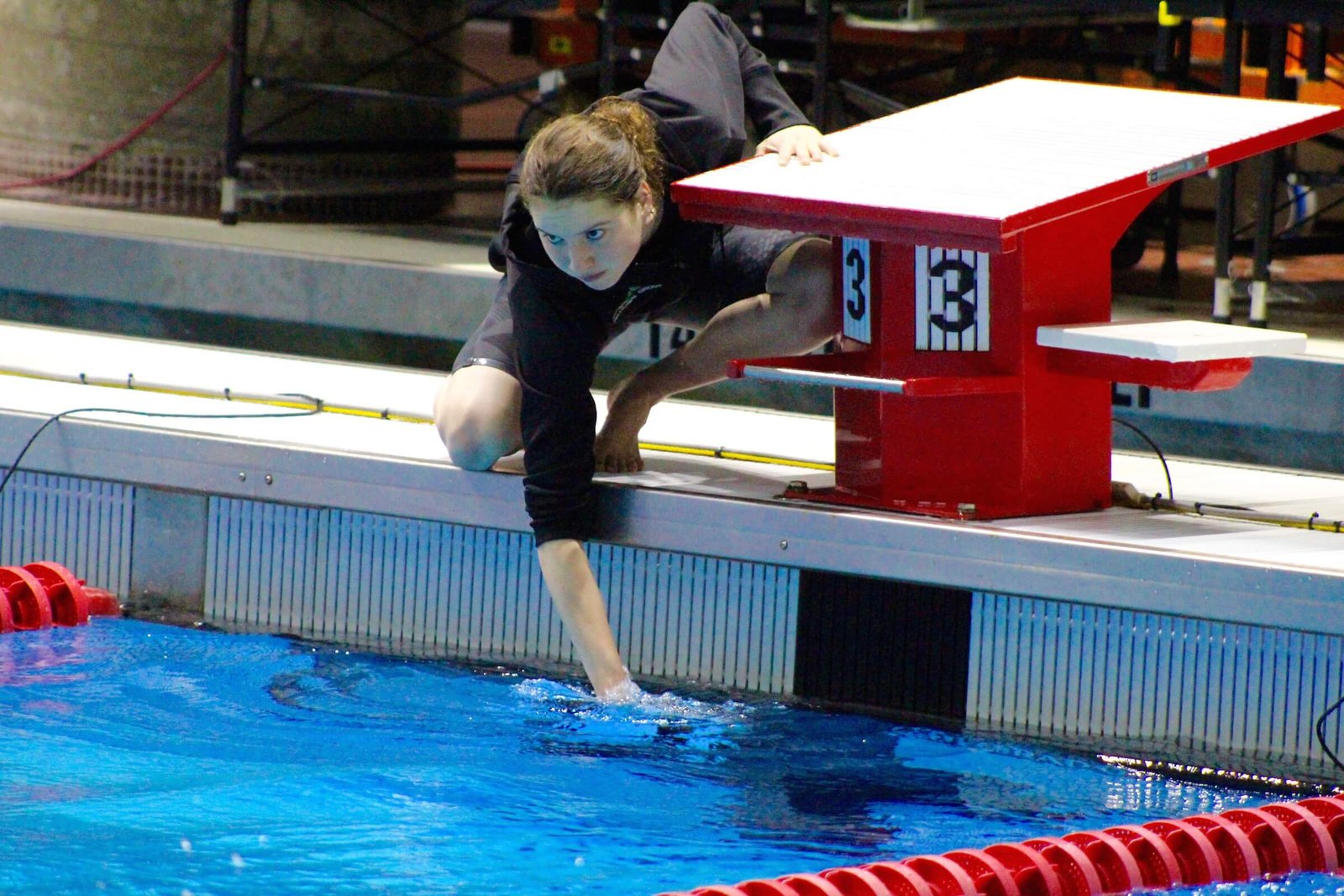
For distance events, swimmers usually have a counter on the pool deck. Someone who dips a board into the water, displaying the number of laps remaining. It changes as the swimmer continues the race. As I approached what I believed was the end of my race, I spotted red on the counter, signaling one lap left.
I sprinted toward the wall with everything I had left, touched, and stopped. Exhausted and disoriented, I pulled off my goggles, ready to be done.
The pool deck was silent.
Then my coaches started yelling. At first, I thought they were cheering. But the yelling continued, and something clearly wasn’t right. I looked up at my mom, who seemed just as confused as I was.
Then it clicked.
I had another 50 yards to swim.
I threw my goggles back on and pushed off again, trying to find the energy for a sprint after I had already finished the race in my head. That final 50 was miserable. I’d given the race everything I had, stopped at the wall, and spent at least a minute recovering. The other swimmers had already finished. Whatever time I’d hoped for was gone.
When I finally touched the wall, the frustration caught up with me. I was 11, exhausted, angry, and crying. Walking off the deck to face my coaches and the person who had been counting my laps felt almost as difficult as finishing the race itself.
However, I wanted another shot and I got one. I kept swimming the 500, eventually making it a regular part of my high school season. Now I swim other distance events, including the 800, 1000, and mile, in the pool and open water. The race that once left me crying on the pool deck is now part of the story of how I became a distance swimmer.
The Eight-Second Tragedy
Few things feel better than dropping time. After a weekend of strong swims, with coaches noticing the improvement and every event seeming to go better than the last, one swimmer was on a roll. Then came the 100-yard butterfly.
She dove in. Perfect start. Perfect technique. Perfect speed. Each stroke pushed her farther in the water, ahead of the competition. She was on fire. When the race ended, exhausted yet thrilled, she looked up at the scoreboard to see an eight-second personal best.
Eight seconds.
In swimming, that’s not a tiny improvement. That’s the kind of drop that makes you want to check the scoreboard twice.
There was just one problem: the swim was disqualified. Immediate frustration and disappointment.
The reason came down to an incorrect finish into the wall. Even worse, the team had worked on that exact skill at practice on the day the swimmer had missed.
After a weekend of improvement, the disqualification brought the winning streak to an abrupt end. The time drop didn’t count, and the event that should have been a highlight became one of the most frustrating moments of the meet.
Swimming has a talent for making the smallest technical details feel enormous. You can be faster, stronger, and more confident than you’ve ever been, but the result still depends on doing everything correctly. A great race can turn into a disqualification before you even have time to celebrate.
The Lane Invader
Sometimes a swimming disaster doesn’t involve a disqualification, a missed cut, or even a particularly difficult race. Sometimes, it is doing the unthinkable by mistake.
One swimmer accidentally joined a lane they thought was designated for cooldown swimming, only to realize it was actually being used that second for a race.
It’s an easy mistake to imagine making when a meet is busy and everyone seems to be moving in a different direction. Still, accidentally inserting yourself into a race is a fairly memorable way to announce your arrival.
But this swimmer’s story didn’t end with only embarrassment. In every event that followed, the swimmer dropped time and finished in the top three.
So much for a ruined meet.
The accidental lane invasion became a memorable mishap, but it didn’t dictate what happened next. If anything, the rest of the meet provided a much better ending than the swimmer could have planned.
Sometimes, the best response to an embarrassing moment is simply to laugh it off and keep swimming. Preferably in the correct lane.
The Goggles-Free Warrior
Goggles are one of the most basic pieces of swimming equipment. Cap? Helpful. Fins? Useful in practice. Goggles? Generally considered essential.
Unless, apparently, you’re about to miss your first 100-yard individual medley.
When one swimmer was around 10 years old, he nearly missed his first 100 IM. Coaches and teammates were looking for the swimmer as the event was about to begin. By the time they were found, there was nearly zero time left to get ready. In the rush to gather everything and make it to the race, one small detail was forgotten.
The goggles.
The swimmer stepped onto the blocks as realization hit, he would have to do the entire race without goggles. That means unseen flips, walls, and competition. It was a challenging race but definitely a memorable one.
When you’re racing against the clock just to reach the blocks, even the most obvious details can slip through the cracks. A stressful situation can make someone forget something they’d normally never leave behind.
At least the swimmer made it to the race. The goggles, unfortunately, did not.
The Two-Hundredths Victim
There are disappointing swims, and then there are swims that leave you wondering whether the scoreboard is out to get you.
After swimming the 100 free with everything she had left to give, one swimmer missed the state qualifying cut by .02.
Two-hundredths of a second.
The swimmer had come close enough to the qualifying time to see it within reach, but close wasn’t enough. The cut was missed, and the frustration was immediate.
But instead of allowing that disappointment to take over the entire meet, the swimmer carried it into the next race: the 100-yard backstroke, determined for revenge.
She took out the frustration, and the result was a state cut in the 100 back that same day.
In a sport where tiny margins can determine whether a time qualifies, missing a cut by such a small amount can feel unfair. But one race doesn’t have to decide how the rest of the meet goes. The same disappointment that could have ruined the day can also become motivation for the next event.
The Three-Tenths Torment
Missing a qualifying time by .30 is a special kind of frustration. It’s close enough to make you wonder what could have gone differently, but not close enough to change the result.
One swimmer matched their personal goal that day, swimming as fast as they had before, but it still wasn’t enough to qualify for the next championship level. They had reached a time they knew they could achieve, yet the next step remained just out of reach.
It’s difficult to accept that kind of result. Matching a personal record should feel like an accomplishment, but when a qualifying cut is the goal, even a strong swim can leave you disappointed.
The experience gave the swimmer a clearer idea of what needed to happen next. They couldn’t control how fast everyone else swam or how far away the qualifying time seemed. What they could control was their own technique, the skills they practiced, and the details they continued to refine.
Swimming makes it easy to focus on the scoreboard. It’s right there, displaying every fraction of a second as if it has the final say on your progress. But improvement doesn’t always happen in a straight line, and a personal record doesn’t become meaningless just because it isn’t enough to qualify.
Three-tenths of a second can be the difference between moving on and staying where you are. It can also be the reason you return to practice with a clearer goal.
The Stories We Remember
Looking back, it’s funny how much power a single race can have over a swimmer’s mood. A missed cut, a disqualification, or an extra 50 yards can turn an ordinary meet into a story that gets retold for years. At the time, those moments can feel enormous. Later, they become part of the collection of memories that makes a team what it is.
Swimming teaches you to measure everything: times, splits, personal records, qualifying cuts. The numbers matter, and so does the disappointment when they don’t turn out the way you hoped. But the numbers aren’t the whole story.
A swimmer who misses a cut by .02 is still a swimmer who came close. A disqualified race doesn’t erase the improvement that led to it. Forgetting goggles doesn’t mean someone isn’t prepared, and finishing a race incorrectly doesn’t mean you can’t come back and do it better.
The moments that feel like the end of the world rarely stay that way forever. They become inside jokes, lessons, motivation, and stories shared with teammates who understand exactly why a few hundredths of a second can matter so much.
