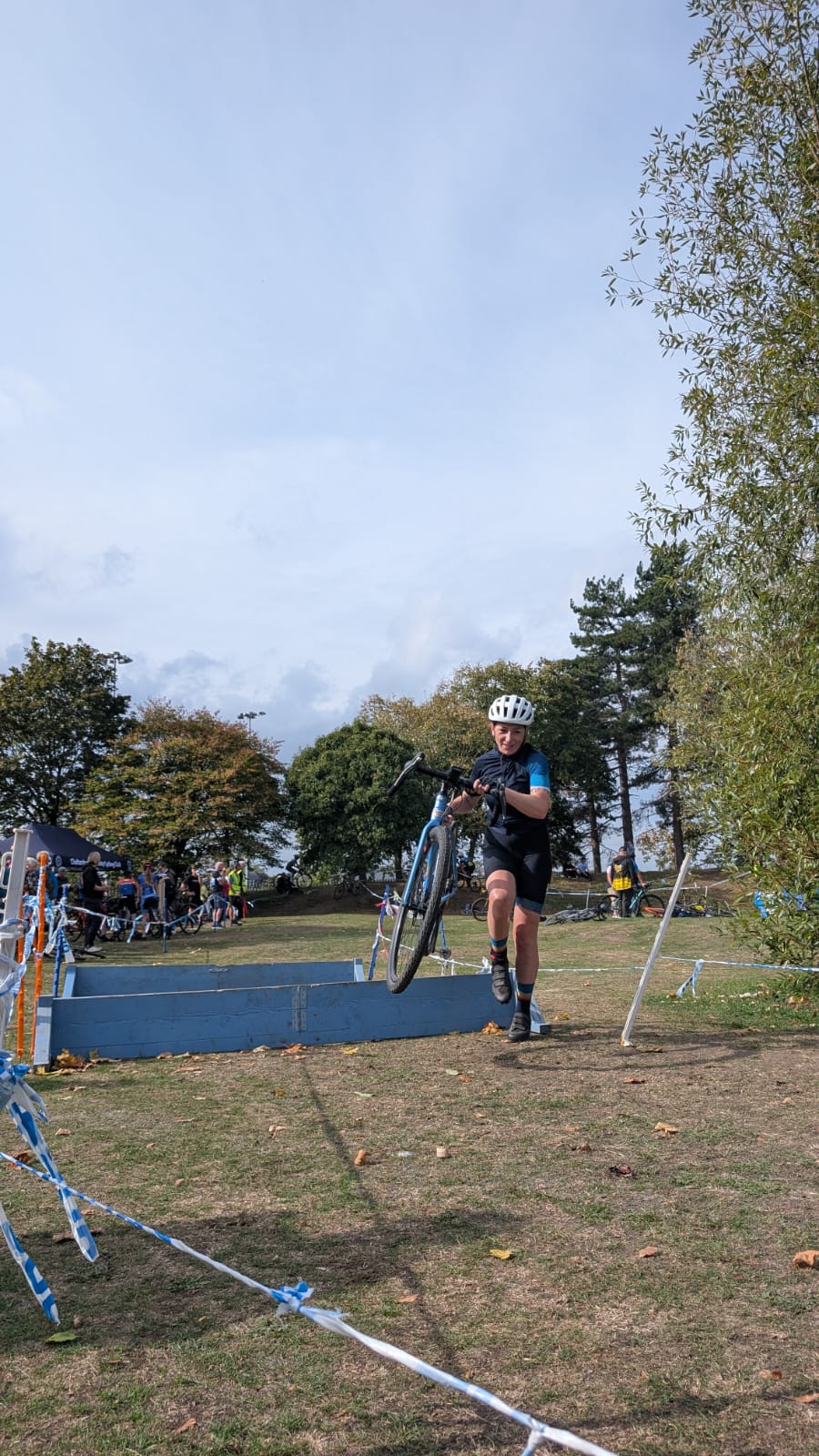
The cautionary words from my friend Ellis that ‘a strong start is really important’ rang in my head as I bodged clipping in as the whistle blew. I fumbled again, and watched desperately as the pack surged ahead, leaving me in a cloud of dirt. I was just about to turn 41, and I was at the start line of my first-ever cyclo-cross race. After questioning why I only sucked at clipping-in during high stake moments, my next big question was: how did I get here?
“Think Parkrun, but with bikes”
Until recently, I hadn’t even watched Cyclocross. I knew very little about the sport beyond the fact that it was a winter discipline, involved a lot of mud and ranged from the World Championships to locally run leagues.
The latter, I was about to discover, are often volunteer-led events by local cycling clubs and take over a range of parks and green spaces for a series of weekends in autumn through to winter. The courses zig-zag across mixed terrain, with obstacles that force riders to dismount, or give the more seasoned racers a chance to show off some envious bunny-hopping.
Think Parkrun, but with bikes, a little more emphasis on the racing bit and, somehow, even more volunteer-led organisation.
How I got to the start line
Two people were instrumental in getting me there. First, my friend Ellis from Bristol Grit, who’d tried CX the previous year and loved it so much that she was determined to help others get through the door. She’d even organised an informal skills-sharing session. And secondly my friend Laura. After we’d both attended the session and like the start of many good adventures, we made a pact to sign up for the first race in our local season, over a pint.
And so on a crisp Sunday morning, I found myself at Round One of the Western League in Pittville Park, Cheltenham, bleating “it’s my first time!” at the sign-up table as I prepared to hand over £25 for a race number. Expecting some unexpected barrier to entry, it took all of 30 seconds to pay and enter. The volunteer reassured me that it was “a good bit of fun” and she was racing that day, too.
(Image credit: Future/Adam Becket)
When I first arrived, I had seen the under-10 kids racing which filled me with a slightly paradoxical sense of comfort that kids could do it, alongside a bit of embarrassment that I was there to race, too. I later learnt that children go first to give them the easiest ride, before the mud gets churned up by the adults. The women’s category follow the kids, and lastly the men’s which due to a bigger turn-out was divided out to separate age categories.
After pinning on my race number and nervously fiddling with my tyre pressure, things got a little more daunting. I crossed the car park to find the leisure centre toilets, which seemed to double as the preparation zone for the serious riders by their cars. Suddenly, I was surrounded by team kits, very nice bikes and competitors warming up on rollers.
Before long, I’d found my friends and fellow competitors, and the course opened for a “sighting lap”; a chance to recce the route before racing. With around 20 minutes until the women’s start, there was a choice to make; to ride multiple laps to get to grips with the course, or save some energy and catch your breath before the race.
Forty minutes of full gas
A loud whistle sounded to signify it was time to gather at the start, and after rearranging us into riders by the points from last season and the newbies at the back, we were off.
“The advice doesn’t always make sense until you’ve learnt the hard way”
Like many unchartered territories, cyclocross comes with plenty of well-meaning advice. It doesn’t always make sense until you’ve learnt the hard way, at which point, you remember exactly what you were told, just as you’re getting it wrong.
After my rough start and finally getting both feet clipped in, I remembered why Ellis had stressed the importance of a getting ahead early, the course with its sharp corners meant that overtaking was difficult, especially for someone keen not to get in anyone’s way in their first race and I found myself at the very back of the pack.

(Image credit: Future/Adam Becket)
As the course stretched on, I hadn’t prepared for how brutal the racing felt, with my heart in my mouth at every switch back and dismount, I was not only spending all my mental energy locked in, I was also trying to sustain full gas for 40 minutes, that bit I hadn’t quite considered. It was eased only slightly by my pals Adam, Melanie and my partner Rich cheering their support by the sidelines.
So far, Cyclocross was reinforcing two things I already knew about club cycling: having self awareness of your skill level is crucial to staying upright, and clear, loud communication between riders is key. The only rules I was told at the start was you had to enter the pit with any technicals via the direction of the course (and not leaving and re-entering it) and riders lapping you had priority.
“It reminded me of a marble run: the obstacles had strung us out across the course, everyone was seemingly heading in different directions”
As the course squiggled about, I found myself passing close to riders on other sections, making shouting out and receiving encouragement part of the fun. It also reminded me of a marble run: the obstacles had strung us out across the course, everyone was seemingly heading in different directions. Keeping track of who was where, let alone who was winning or coming last, felt like a fun guessing game.
After a brief slide-out on a dusty corner, with hearty encouragement from the nearest marshal to keep going, I threw myself back onto the bike and wondered how much harder I’d have found the course in wet conditions. Later, a fellow rider remarked that climate change could mean less mud for CX in the years to come. It’s a sobering thought, even if a slightly drier course might make the sport feel a little less intimidating for newcomers like me.
Eventually, our 40 minutes were up. In CX, the race doesn’t end when the clock runs out; the first rider to finish her final lap determines when the rest of the field follows. As I was lapped by the leaders, after seven laps, it was my turn to cross the finish line.

(Image credit: Future/Adam Becket)
I dropped to the ground beside my bike, with puffed out cheeks, trying not to fully dissociate. I quickly decided that CX was absolutely type 2 fun. Admittedly, self-imposed, that was the hardest 12km I had ever cycled. As I sat and recovered I got to enjoy watching the other finishers’ storm through.
During our skills session, Ellis had mentioned how different the experience of racing could feel depending on the field you were riding in. Having stayed to watch the later races, I understood. The field was more densely packed, with some lively jostling and a few spills in the tighter sections. I’d raced alongside around 20 women, ranging from juniors to riders over 50, and often found myself with a little space to work things out. The racing was still hard, but that space helped ease some of my initial worries about someone crashing into me, or worse, me causing a crash.
From first-timer to CX convert
My first cyclo-cross race was done, and I hadn’t died. To be honest, the race had been so hectic and unfamiliar that I wasn’t entirely sure how I felt about the day, particularly my own performance. But after my second event in the league a couple of weeks later, things began to crystallise. I was hooked.
Riding home to Bristol from the Stroud event, the second round of the Western League, my fellow Harts Cycle Club cyclist Bekah and I spent most of the 60km journey dissecting the race and what we thought of the sport and how we would approach things next time.
What really stood out from the whole experience was just how easy it was to turn up and sign up on the day, thanks to the volunteers and friendly riders. If you’re curious, look up your local league, ask a friend to join you or try a beginner-friendly skills session. You might spend your first race wondering what you’ve signed up for, but you might also find yourself riding home already planning your next one.
