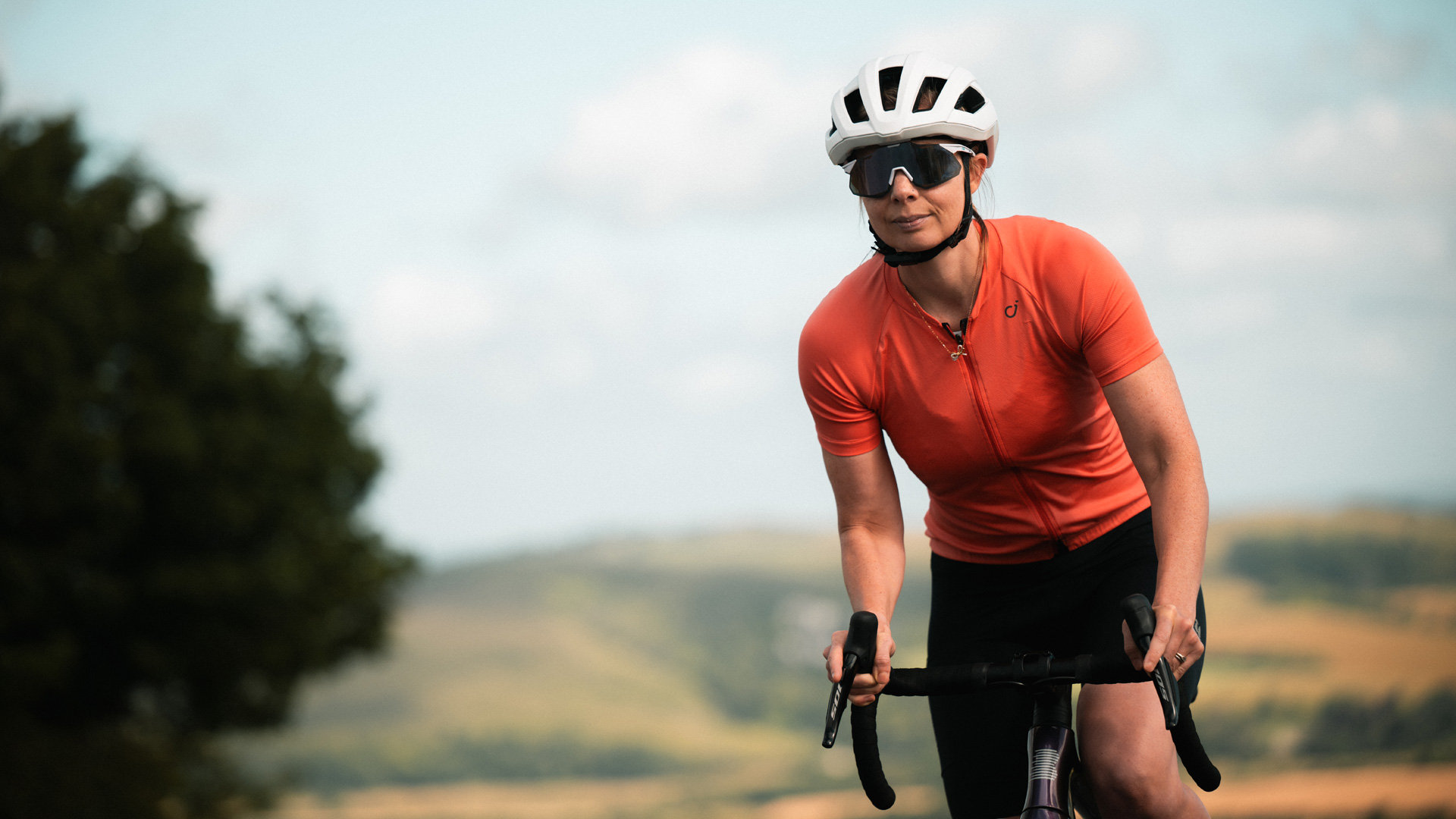
I realised, toggling the ‘training bias’ on my last indoor training session down to a 92% effort because ‘100% felt a bit hard’, that I’ve not tested my functional threshold power (FTP) for around six years.
Back in 2020, it was Covid lockdowns that put paid to my season’s goals. Whilst the lay-off was longer than expected for most of us, the race calendar did eventually power back up. I, however, did not. Or at least, I powered in a very different direction: new house, baby one, baby two, you get the idea. And here we are, six years later, with an unknown entity hovering around in the space of a number that used to mean a lot to me.
FTP, the power a rider can hold for sixty minutes, is a benchmark in cycling performance. Whilst there are variations (Wahoo’s 4DP, Critical Power), nearly all training plans and software use a percentage of a known, and ideally regularly tested, power figure to set rider efforts during training. When your head is locked into racing, it can be easy to assume that ‘everyone’ is completing structured sessions using pre-set power zones.
Latest Videos FromCycling Weekly
The reality is that taking a more relaxed “what does my body need to do today?” approach is actually more common than the training literature might suggest. Adjusting volumes and intensity based on feel, fatigue and external factors is not without its benefits, with a few caveats in place.
‘Most riders with no recognised FTP test still use workouts’
The majority of riders use cycling as a way to stay fit and healthy
(Image credit: Future)
A Cycling Weekly audience survey revealed that 73% of respondents considered themselves ‘fitness riders’, using the bike to stay ‘fit and healthy’. Just 16% put themselves in the ‘competitive cyclist’ bracket. Wanting to get away from screen time and ‘feeling sluggish’ were primary triggers for getting on the bike, so it seems reasonable to assume that townsign sprints with friends and lunchbreak power hours are more common than structured VO2 max efforts.
Numbers at Zwift concur. Asked for stats on the number of riders actively testing FTP – the metric used to set zones for Zwift’s ‘workout’ library – a representative said “over the last year, around three in four active Zwifters recorded a workout [which would feature structured intervals], while fewer than one in four recorded a recognised FTP-test ride.”
Zwift’s rep added: “Even among riders without a recognised test ride, about two in three used workouts. Most riders combined workouts with other kinds of riding.” The brand added, “Most riders with no recognised FTP test still use workouts (67.7%).”
It is worth noting that Zwift will calculate a ‘zFTP’ based on activities completed in the last 90 days, and an FTP number could be given after completing a 20-minute effort, such as riding the platform’s climb ‘The Grade’; 97.5% of Zwifters without a recognised FTP test do have a calculated zFTP/zMAP record. But, this is much more ad hoc than a rider actively seeking out a benchmark and repeating the test monthly.
Perhaps interestingly, competitor MyWhoosh‘s September update saw the brand release a new ‘Smart Workout Selector’, which it says “helps riders narrow down the MyWhoosh workout library based on what they want from their session and how they are feeling on the day.” Sessions are suggested after riders report on factors such as recovery, sleep, muscle soreness and available time.
Looking at the wider picture, Strava’s Year in Sport of 2025 showed that over half (54%) of users take part in two or more sport types, with 34% recording over three sport types.
There are generational changes too, Strava reported that Gen Z athletes (born between 1997 and 2012) were twice as likely as older generations to pick strength training as their main sport. Despite being an aged millennial (1981 and 1996) this certainly chimes with my own habits; and I’d suggest hitting the weights or training in other sports on non-riding days can shift the bike focus from chasing numbers to a more holistic muscle soreness and recovery function.
The final piece in the puzzle is that we know participation numbers across competitive bike racing, certainly in the UK, are dwindling, with more and more exercisers citing ‘mental health’ as a reason for getting active. If you’re pushing the pedals to feel happier rather than to turn the screw in the latter half of a road race, it’s hardly surprising that number crunching has taken a back seat.
All in, the wider picture suggests that cyclists are broadening their interests, and that training platforms may be adapting to the reality of recreational athletes’ lifestyles, where hitting a goal on the bike that day may just not be the priority.
‘A lot of cyclists don’t do well riding off feel’

Riders can over-cook easy rides and under-perform on efforts if not controlled
(Image credit: Roo Fowler for Future)
Obviously, the training a rider completes day-to-day will be heavily influenced by their goals and training history. If it’s not, well, something is wrong.
Set power zones come in handy for riders with ambitious goals, where they need to avoid under- or overtraining.
“Riding off feel is something a lot of riders don’t do well,” Sport and Exercise scientist and coach at ATP Performance, Andy Turner, outlined. Though if we’re being picky, Turner did note he prefers to use Critical Power over FTP.
Lamenting the disorganisation that can occur when targets go out the window, he noted: “Zone 2 [easy] rides end up tempo. Effort rides end up too easy, or too hard, and people do maximal efforts at every opportunity.
“I’ve seen chronic cases where there is exercise addiction and a sort of cortisol addiction too. Training less gives withdrawal symptoms. So using thresholds to keep training at the appropriate level ensures [the rider] is not overdoing it,” says Turner.
However, there are instances where he’ll have cyclists ride ‘blind’, without the numbers, “both to push the maximal [effort], but also to test how well they can hit a power zone without actually looking at numbers. It’s also useful to know the RPE compared to power for determining when fatigue might be becoming too much and rest is needed.”
Returning and beginner riders are another caveat, he adds: “I have a rider starting up again after three years off the bike, and we won’t be testing for a few months. We’ll go off Rate of Perceived Exertion and Heart Rate initially, as those are good metrics to become attuned with before using watts and taking those as gospel,” Turner said.
‘If you’re a type A personality, numbers can be unhelpful’

Josie Perry advises athletes focus on the metrics that appeal to their motivations for riding
(Image credit: Future)
It’s fairly unanimously accepted that training with set zones has its place. However, when focus shifts from performance goals to enjoyment, things change. Particularly if external events and responsibilities (allostatic load) dictate energy levels and performance.
“If you’re a highly intelligent perfectionist, that ‘type A’ personality, [these people] love numbers, but they can actually be really unhelpful because the numbers just create threat,” outlines Sports Psychologist Josie Perry. “When their brain sees threat, i.e. I might fail, they have biological responses in the body. They’re unable to get the best out of themselves, so they’re much better at focusing on inputs to their performance, [such as] how many sessions [they’ve completed a week], or how hard they work in sessions, or specific ways of doing sessions,” Perry outlines.
Some other personality types might get on better with set targets. “If you’re a more pragmatic rider, we tend to be lazier. Then numbers can be helpful because they give us something to focus on when actually what our brain is saying is ‘take it easy’.”
In short, she says: “If you have a brain that is constantly trying to push you to do more and more and more”, I’ll put my hand up and admit that’s me, by the way, “numbers don’t help. If you have a brain that tends to default to let’s do as little as possible, numbers can be helpful because they give you something to drive you towards and will make you work a bit harder.”
So, what’s the prescription for those ‘Type A’ riders, for whom set power zones don’t sit well with leisure and fitness riding goals?
“My advice would be to pick three or four data points that help [you monitor well-being and fitness] and probably ignore everything else,” Perry says, stating that she keeps an eye on resting heart rate as a guage of wellness.
If you need a little more, she takes it back to RPE, or Rate of Perceived Exertion. That’s completing efforts using a subjective measure of how hard your body is working. A 20-minute push would probably be ridden at around 7/10, 3-5 intervals likely at around 8 or 9, and your all-out sprint is a 10.
“If your session is a six out of 10, moving it up to an eight for 20 minutes in the middle, and back down to six, you can always achieve that, even if it means on that day your numbers were down. You’re still going to achieve what’s set,” Perry says.
‘Just twist the dial to make it harder’

As long as riding doesn’t have competitive goals, I’ll stick with the RPE scale
(Image credit: Roo Fowler for Future)
When I set out upon this article, which began life as a light-hearted opinion piece and somehow morphed into a mini-feature along the way, it occurred to me that the logical conclusion was likely going to result in me clipping in for 20-minutes of brutal testing.
Refreshingly, I was wrong.
Power testing absolutely has a valuable place. If I wanted to race again, I’d want to set myself a benchmark to work against.
For now? I’ll be taking Perry’s advice. “When I ride intervals, I use a Wattbike, and I just twist the dial to make it harder,” the psychologist – who is still winning races “for fun” – told me. My version would be just toggling the effort down to 92% because I fed a baby back to sleep eight times last night, and, well, haven’t tested my FTP for six years, anyway.
