Alex Sanderson oversaw one of Prem’s biggest squad turnovers this summer, with 12 new players arriving at Sale.
“When you have got a raft of possible players, stats are always a big factor to help understand which of them fit your game model,” he says.
“We know how many metres we make post contact, what our defence depends on, and what attacking decisions we make and you can map those metrics.
“You can create a spider graph to find players that fit the ‘shape’ that you want for a particular position.”
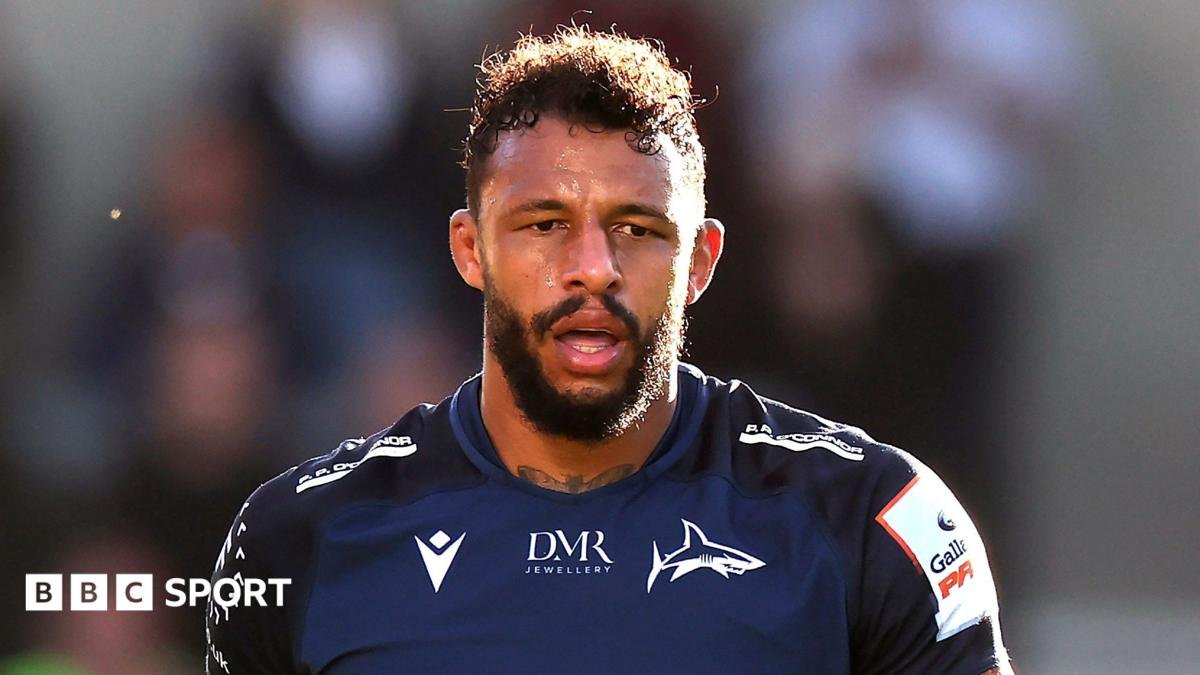
Courtney Lawes was Sale’s headline signing. The numbers he was registering in ProD2 with Brive, helped convince Sanderson that the former England captain was worth a one-year deal.
In a similar way, stats also helped Phil Dowson, Sanderson’s counterpart at Northampton, work out how to replace Lawes when he left Saints in 2024.
“We also have a game model around what we want different positions to look like,” he said.
“If you can’t get everything you need in a position, at a price point you can afford, you have to make amends elsewhere.
“So to replace Courtney Lawes, we needed some line-out ability, some turnover ability, some ball-carrying and also some leadership.
“The game is now being coded in so much more depth than previously and the challenge is to use that to separate the wheat from the chaff.
“We try and find people who fit the bill, trim the list depending on what we can afford and then do due diligence by looking more deeply at their performances.”
The edge for clubs now is no longer the data itself, but the ability to identify what is most important amongst it all.
Oval has developed a model which flags up players who have outperformed its expectations in different aspects of the game.
But clubs are also looking externally for expertise.
Sale are bringing on board an artificial intelligence company, recently bought by billionaire owner Simon Orange.
It will initially crunch numbers on injury prevention and player availability, but Sanderson plans to add recruitment to its tasklist.
Northampton have had help from the world of Formula 1.
Ayao Komatsu, the Haas team principal, was a rugby player and is still a rugby fan. The 50-year-old turned out for Old Wheatleyans and Loughborough when he moved from his native Japan to study in the Midlands in the 1990s.
He has come into Northampton to talk over his approach to data with Dowson.
“For Ayao, the most important thing is the driver,” says Dowson. “How does he feel? For Haas, the driver’s backside is the best receptor of data.
“Even in a sport like F1, which is so data driven, he is still going to the human element of it. That is something that resonates with me.”
Sanderson also emphasises that while data can sift and shortlist possibilities, there is a human touch to recruitment.
A coach’s eye can pick up on details around a carry or clearout which might be missed by a blunt database definition.
Just as importantly, in a sport in which success often hinges on cohesion and unity, any new arrival needs to fit in as a person, as well as a player.
“That data dive and performance analysis will only get them to the door, really,” says Sanderson.
“Then it’s all about character. It has to be about character, because there’s quite a lot of players that consistently look quite good, but won’t be the right fit for the group.”
