In Follow The Money, Ben Portnoy will bring you into a weekly deep dive into the business of college sports.
How about Week 1, huh?
College football truly always delivers the goods — especially when the slate seems sleepy and we don’t expect anything weird to happen. But, as always in this sport, expect the weirdest possible scenario to play out.
Anyway, hope you all had better holiday weekends than the electrical engineers at Florida State or the timekeepers in Ann Arbor.
On to some news, which is mostly playing out behind the scenes:
There will be signs.
Yes, corporate signs; the ones college sports so long avoided; the ones that are now a necessity to compete in the upper echelons of high-major college.
By now you’ve seen corporate jersey patches everywhere.
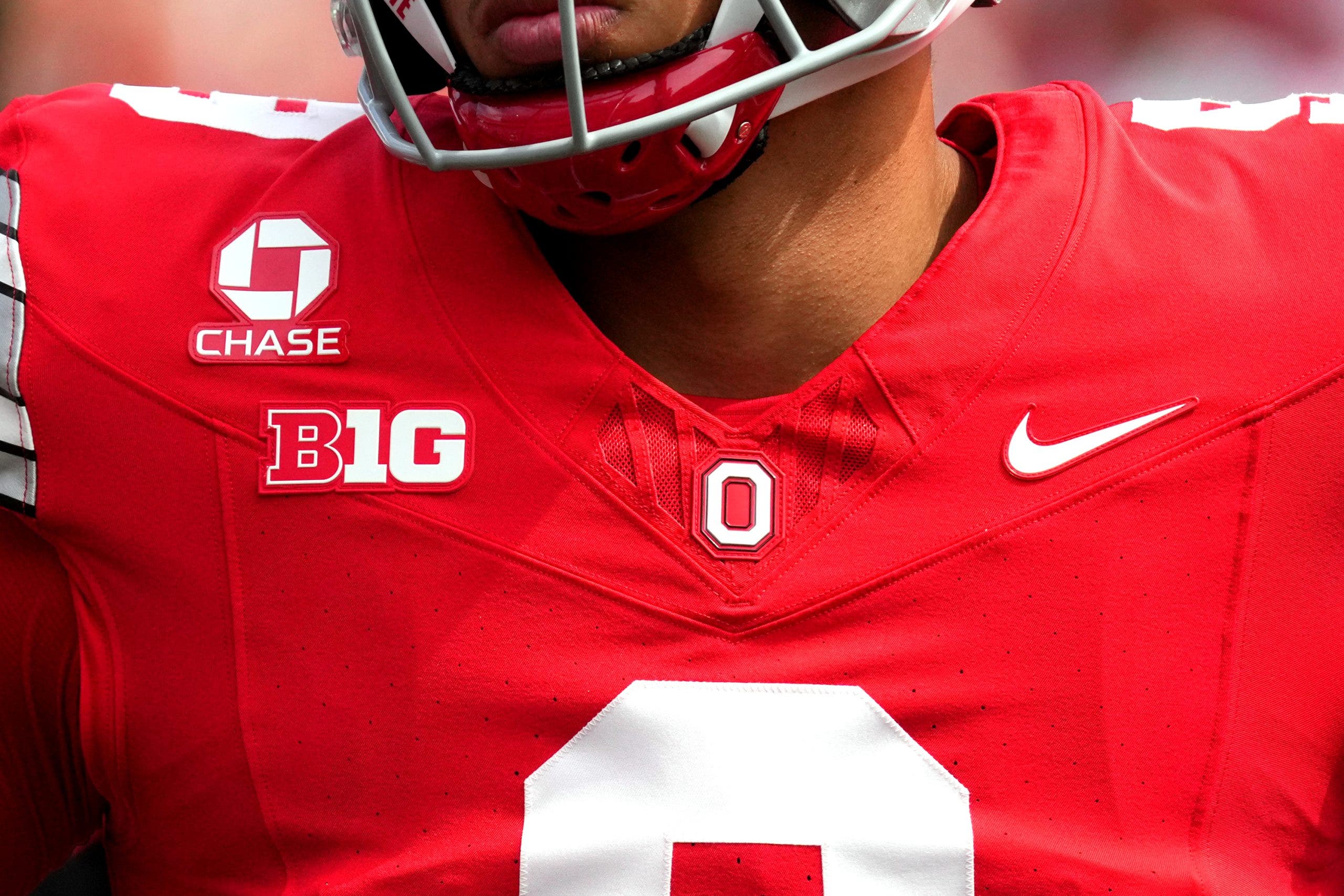
A Chase Bank jersey patch on Ohio State’s Week 1 uniforms. (Photo by Jason Mowry/Icon Sportswire via Getty Images)
Ohio State and JPMorganChase. Arkansas and Tyson Foods. Wisconsin and Culver’s. Each patch is fetching millions in annual advertising dollars that were made available prior with an update to NCAA rules over the last 12 months.
The question stakeholders have yet to resolve, however, is whether those patches can appear during the College Football Playoff.
The answer? TBD — but progress is being made.
Multiple sources, who spoke with me on the condition of anonymity given the fluid nature of the discussions, said the CFP is in the active process of creating policies around corporate jersey patches and their place in the playoff amid broader conversations about the organization’s future structure.
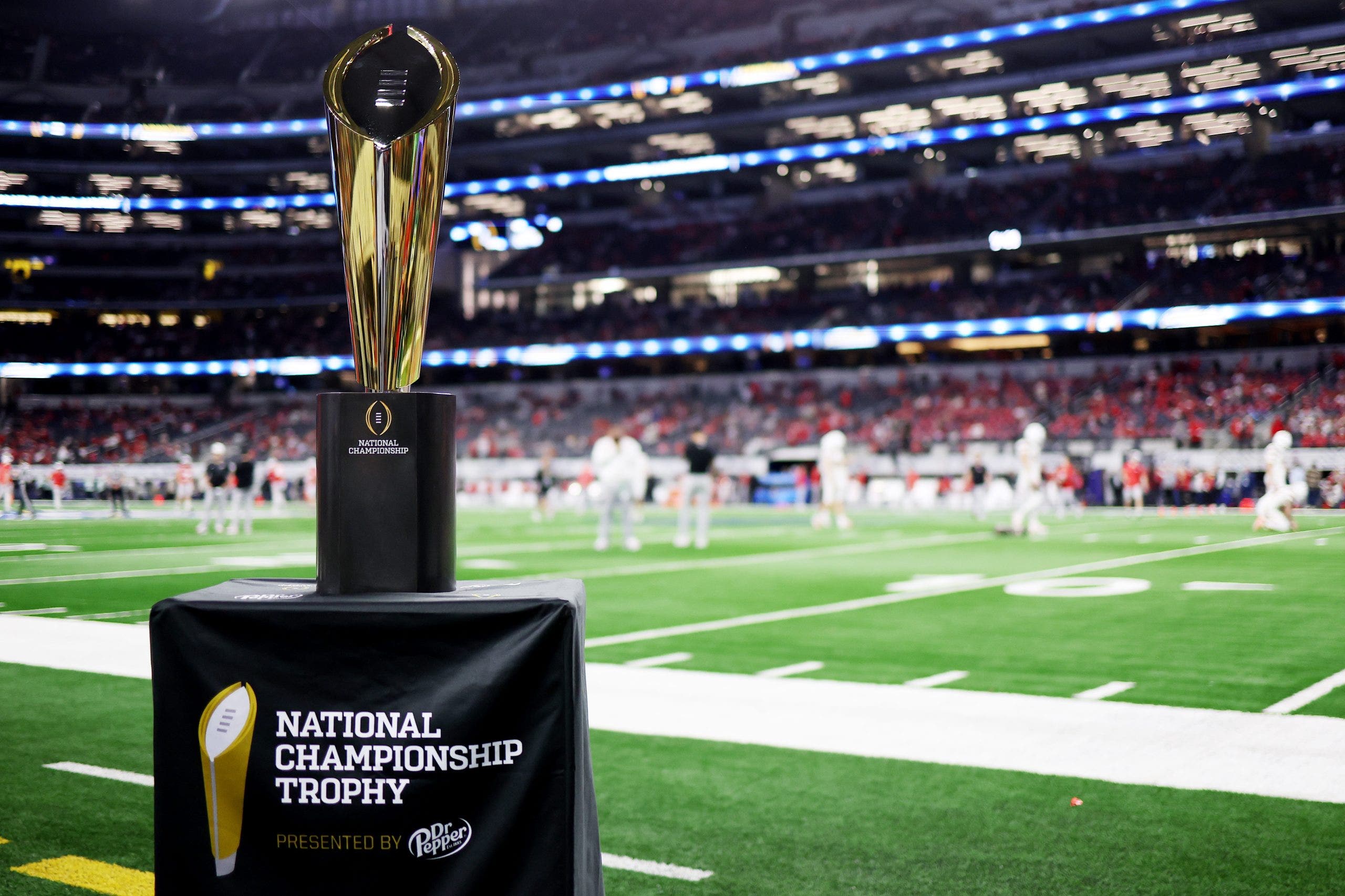
The College Football national championship trophy with a Dr Pepper logo on it. (Photo by Sam Hodde/Getty Images)
Bigger ticket items — expansion, an exclusive negotiating window with ESPN and more — loom larger and more pressing as a December 1 deadline to change the 12-team playoff field size for 2027 is around the corner.
That said, the jersey patch situation has had ripe conversation around two key components:
- How to address corporate deals signed by schools that might overlap with CFP sponsors
- Whether ESPN will have any involvement in the integration of the patches
These deals have proven incredibly lucrative and have cropped up across the college football world. Ohio State’s agreement with JPMorganChase is among the priciest in the country at around $17 million annually. Notre Dame is fetching an even greater $18-20 million from SoFi. Even schools like Oklahoma State, Kansas State and Washington State are fetching in the seven figures annually.
The value of those assets could also be further bolstered by appearing in the CFP given the viewership potential of playoff games. Playfly — a leading multimedia rights company which counts around a dozen Power Four schools as clients — projects the sponsorship value of patches worn across CFP games to be in the significant eight-figure range, scaling from a first-round exit through the national championship game.
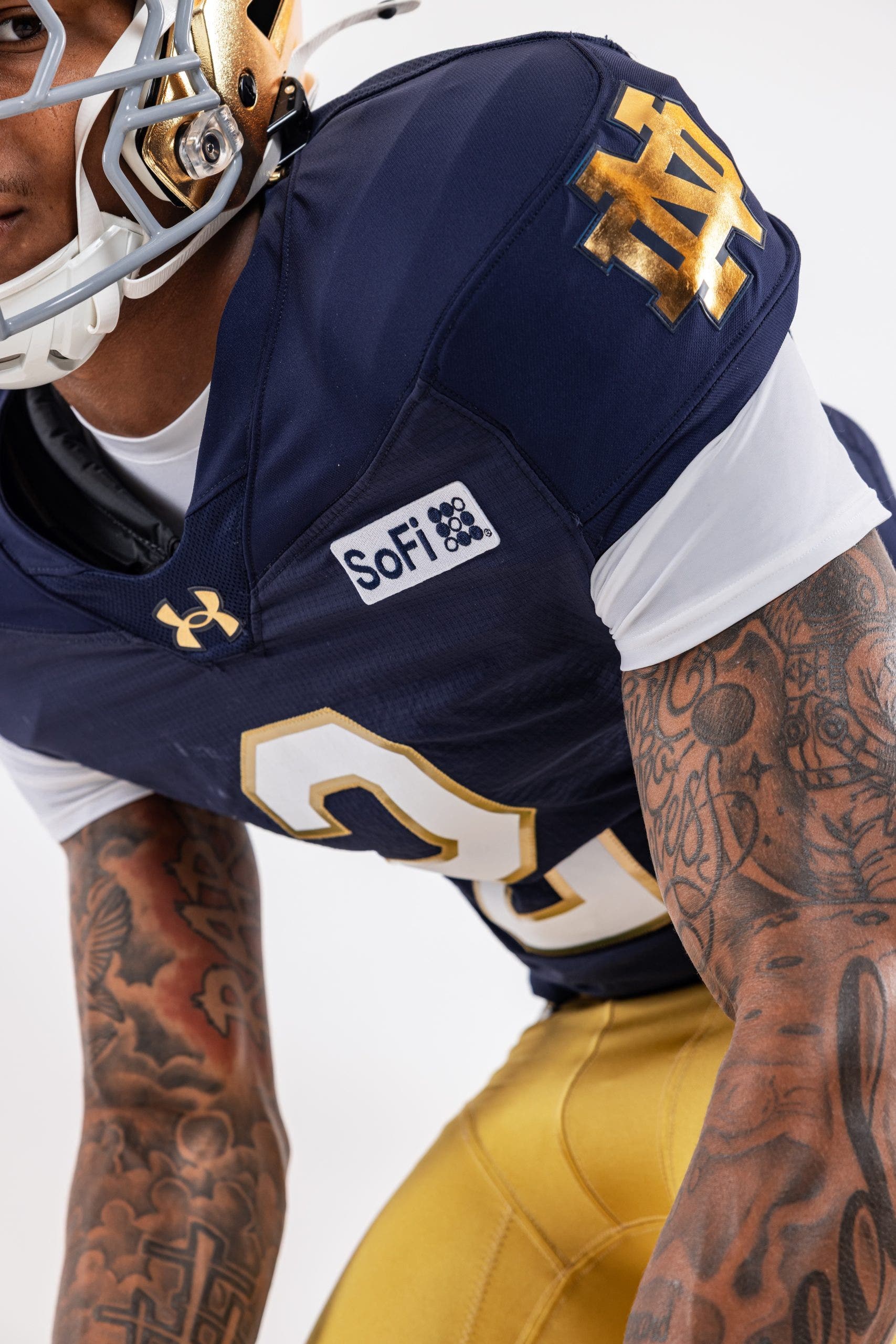
(Photo courtesy of Notre Dame.)
The company also likens a CFP appearance and its business value to advertising in professional postseasons, which fetch advertising prices that range from 1.5-to-3 times the regular season, while championship games are worth even more.
However, there are crucial quirks that exist with integrating such assets within the structure of the CFP.
The CFP’s corporate partnership program includes a slew of heavyweight brands such as Allstate, Chick-fil-a, Dr Pepper, Goodyear and Taco Bell. How then, might it work if a school were to sell a jersey patch to a direct competitor like Geico or McDonald’s?
The World Cup is perhaps the most direct comparison. Stadiums in Boston, Los Angeles and elsewhere had their buildings renamed to account for exclusive partnerships FIFA had agreed to.
Notre Dame is likely the most logical school to face such a conversation in a college football context, given SoFi is a direct competitor of Capital One, one of the CFP’s corporate partners.
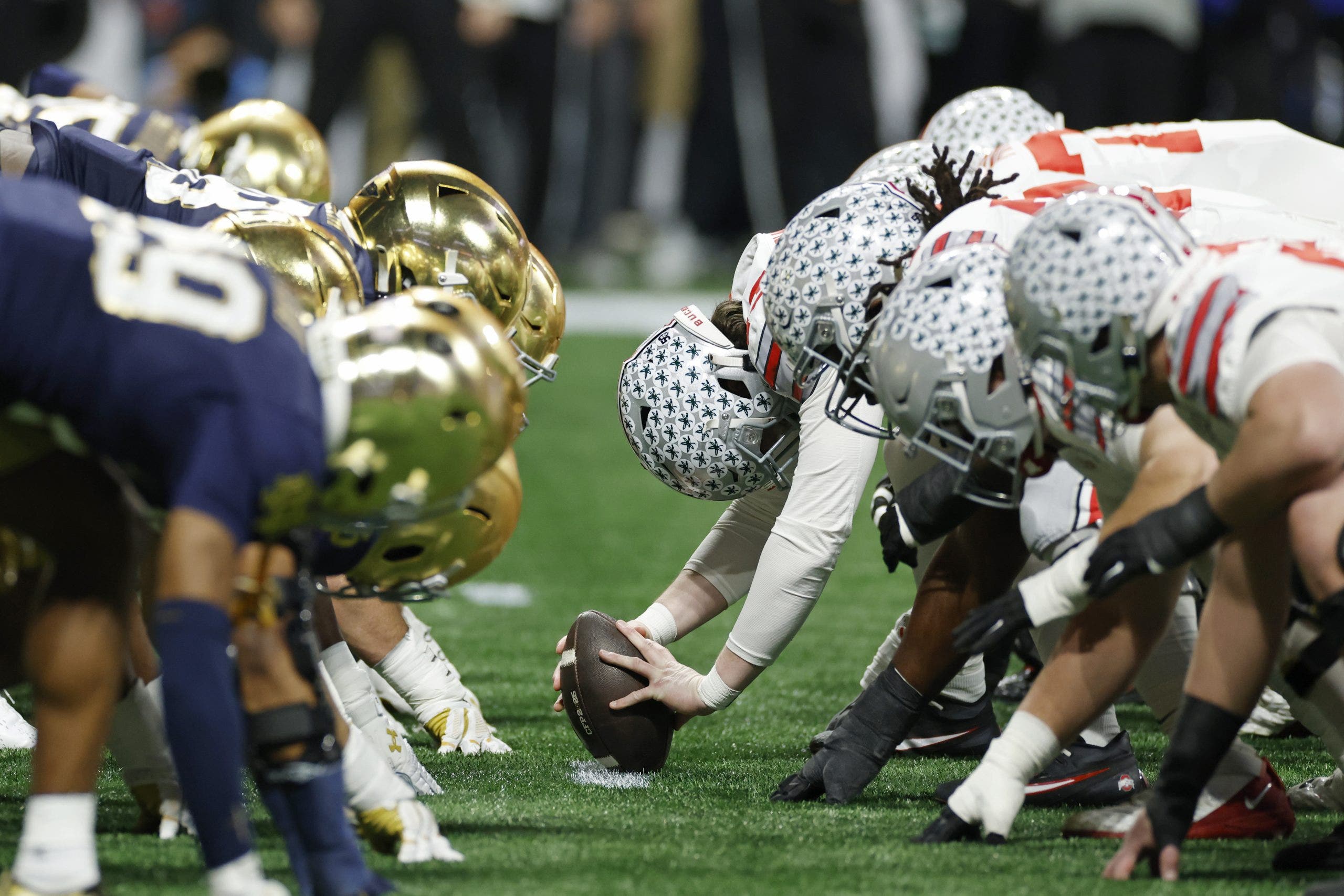
Ohio State and Notre Dame face off during the 2024-25 College Football Playoff national championship game, which the Buckeyes ultimately won. (Photo by Joe Robbins/Icon Sportswire via Getty Images)
It’s possible, though certainly not finalized, the Fighting Irish wouldn’t be able to wear their corporate patch given the exclusivity Capital One has purchased in that advertising category, sources said.
Those schools that have corporate partners that don’t overlap with the CFP might also face their own fees related to integrating their season-long patches. It’s likely activation fees that fluctuate in value depending on the round of the playoff that would be paid to ESPN would be included in any formalized policy, sources said.
The cadence of jersey patch talks is particularly relevant as the CFP is poised for major discussions about its future in the coming weeks.
Expansion talks remain at the forefront as the CFP’s management committee moved forward with the first major step in that discussion on Tuesday, opening a 30-day exclusive negotiating window with ESPN that is expected to help better understand the finances behind an expanded playoff.
“This does not represent a decision or commitment to expand, but rather an opportunity to engage with ESPN and gather additional information to help determine a path forward,” the CFP said in a statement released on Tuesday.
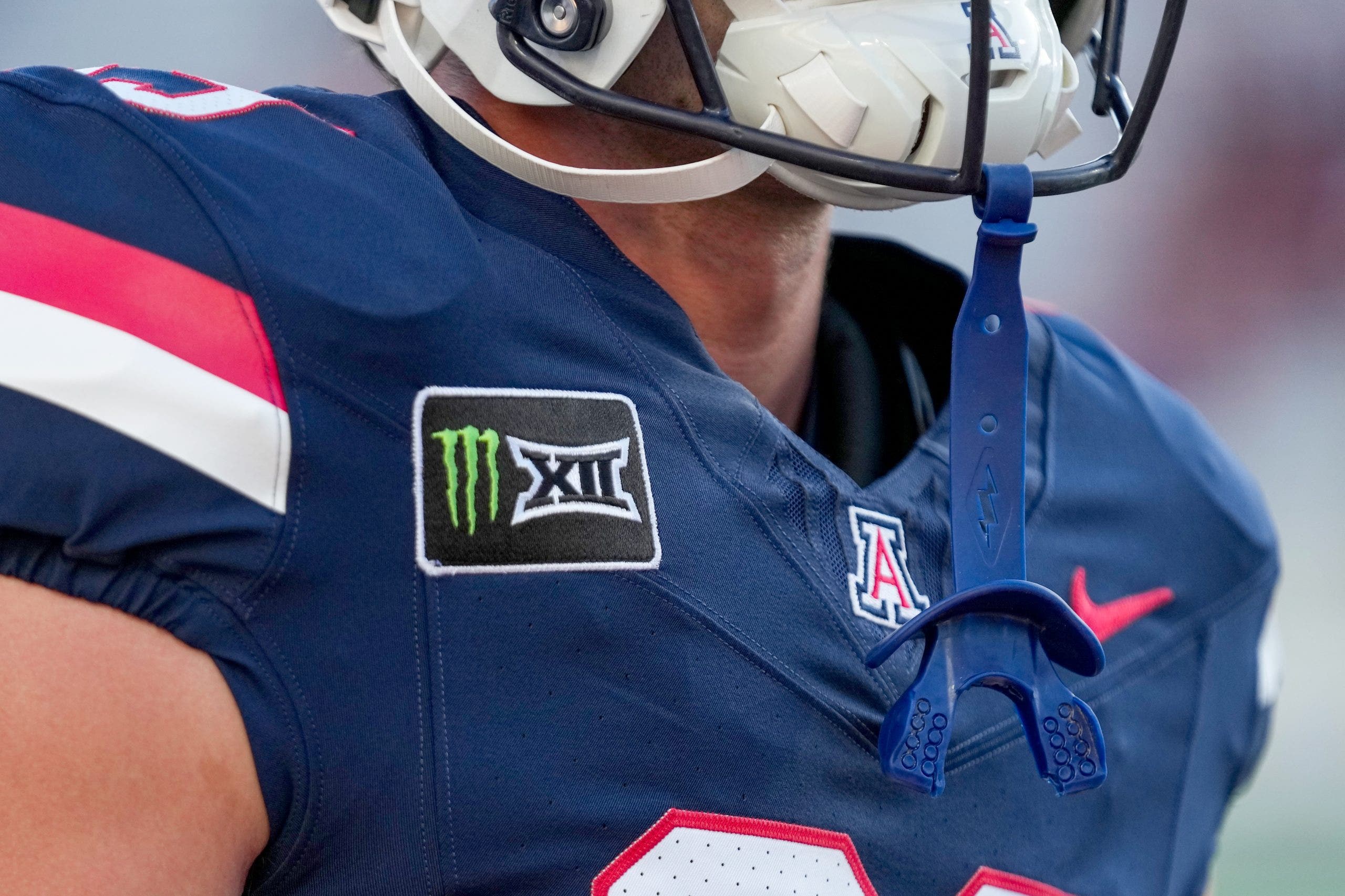
A Monster Energy Drink and Big 12 partnership patch on Arizona’s Week 1 jerseys. (Photo by Patrick Mulligan/Getty Images)
The jersey patch situation has its own firmer deadline given schools like Ohio State, Notre Dame, LSU and other contenders have sold that inventory.
A subcommittee headed up by Big 12 Commissioner Brett Yormark has been discussing the matter for months and talks are likely to heat up in short order.
But with the season off and running and the CFP only three months out, decisions need to be made — and millions in advertising dollars are at stake.
 Best Quote I Saw This Week
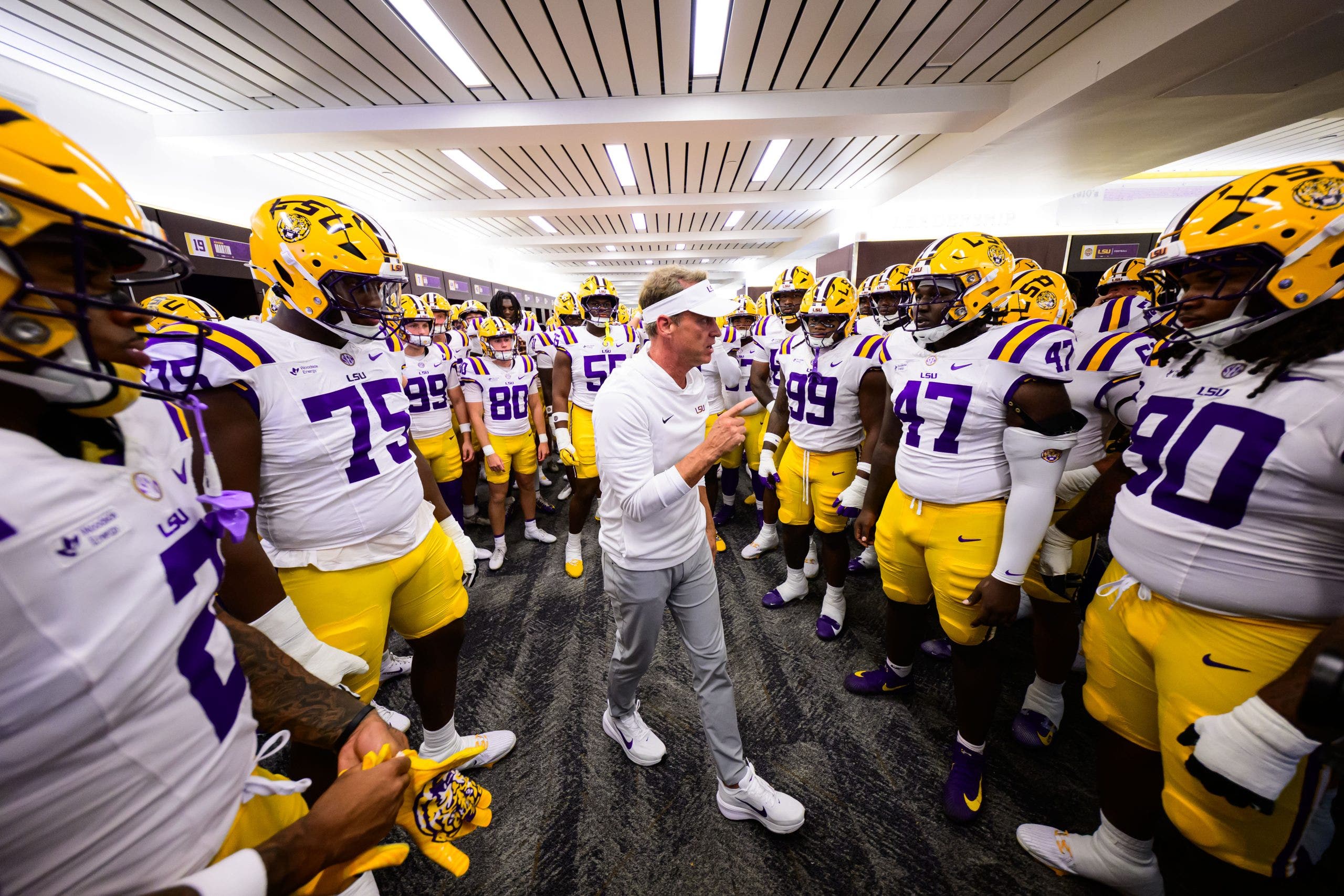
Lane Kiffin talks to LSU players before beating Clemson in Week 1. (Photo by Ella Hall/University Images via Getty Images}
“Imagine if we had pro players.” — LSU head coach Lane Kiffin during his halftime interview with ESPN’s Holly Rowe in a nod to the school’s ongoing legal fight with the SEC.
What a week. The LSU-SEC “will they, won’t they” drama continued to unfold late into Tuesday evening as the school added a pair of players to fill out its roster, thus eliminating the possibility it might later bring professional players on.
A Wednesday hearing in Birmingham has been pushed back, but a meeting of the SEC presidents is still on the docket for Thursday to discuss LSU’s future and, potentially, stiff penalties for the entire saga.
WHAT YOU SHOULD READ NEXT
 Best Deal I Saw This Week
Kentucky announced a multiyear deal with Heaven Hill brands that will see club spaces at Kroger Field and Rupp Arena rebranded around Elijah Craig.
The Wildcats will also be one of six teams in the country that will make up the “Evan Williams Bourbon Nation,” beginning this year, while Elijah Craig and Evan Williams products will be sold at the school’s athletics venues.
Bourbon and college football is a match made in Heaven. Great work, everyone.
Joel Klatt reveals his first top 10 of the 2026 season 👀 Joel Klatt Show